
Aluminum is a remarkable material. Its unique combination of properties makes it suitable for a wide range of applications. When exposed to air, aluminum instantly forms a thin, transparent oxide film on its surface, providing a corrosion-resistant barrier that re-forms whenever the metal is cut or abraded. For many applications, this glass-hard protective layer is all the surface finishing aluminum needs.
There are, however, circumstances where it may be necessary to add an additional protective or decorative finish to your aluminum extrusion profile. Choosing the correct finish is a key step in the process. The wrong surface finish can look off aesthetically or fail to protect the metal, resulting in accelerated corrosion and potential structural issues. It is important to work closely with your aluminum extrusion manufacturer to get the best advice on choosing the ideal surface finish for your specific needs.
Why Add a Finish to Your Aluminum Extrusion?
There are three main reasons to apply an additional finish to your aluminum extrusion: improving corrosion resistance, preparing the surface for coating or painting, or enhancing the appearance of the aluminum.
Environmental Protection: The natural oxide film on aluminum protects it from corrosion, but in extreme environments, extra protection may be needed. Significant variations in moisture, humidity, and temperature can accelerate corrosion, as can use in near-ocean or marine environments. In these instances, an added finish can help mitigate these environmental effects on the metal.
Metal Preparation: An additional finish may also be needed to prepare the metal surface for a subsequent coating or paint application. Mechanical finishing, chemical etching, or a conversion coating can improve adhesion and ensure a uniform, long-lasting result. Proper surface preparation is especially important in architectural and structural applications where the final coating must perform for decades.
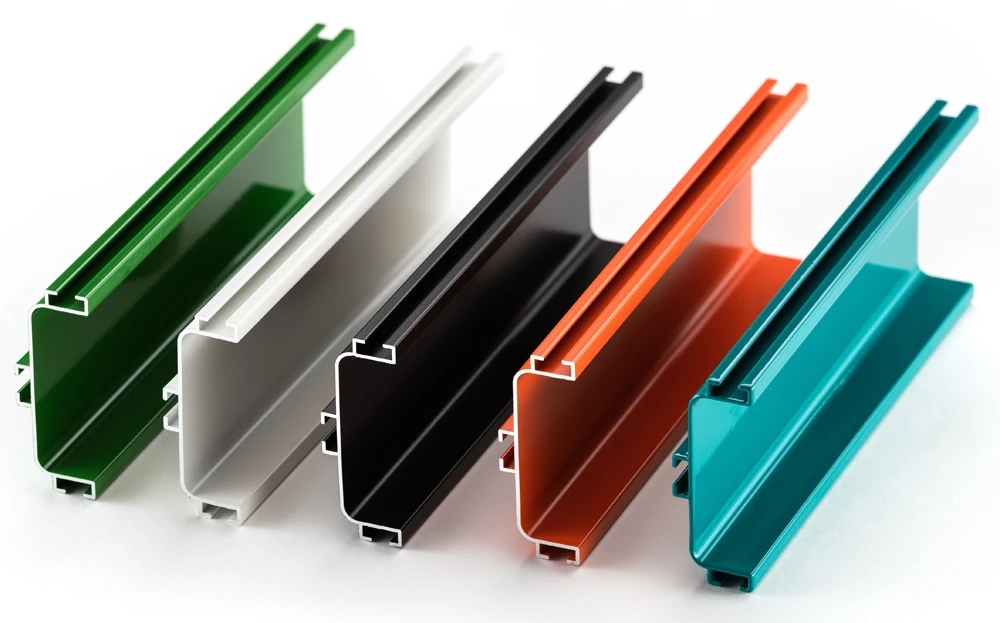
Enhanced Appearance: Finishing may also be required for aesthetic reasons, particularly in consumer products where appearance is often the first requirement. Depending on the look you are trying to achieve—a brightly colored finished product, a mirror finish, or a textured look—different techniques can be applied.
What Types of Finishing Techniques Are Available?
It is important to bear in mind that the choice of finish affects the price of the finished product. The finer the surface, the higher the production cost. While there are hundreds of different kinds of surface finishing, most typically fall into five distinct categories:
- Mechanical finishes are used to add texture to a surface or polish it to a chrome-like finish. Techniques include sanding, polishing, grinding, buffing, or blasting. Mechanical finishing is commonly used as a preparatory step before anodizing or coating to ensure a uniform surface.
- Chemical finishes are applied by dipping the profile in a chemical mixture. The most popular chemical finishes include etching, which yields a frosted surface appearance, and bright-dipping, which produces a very shiny, specular (mirror) finish. Chemical finishes are often used in architectural trim and decorative profiles.
- Anodizing is a process in which the aluminum profile is immersed in a tank containing an acid-based electrolyte. An electrical current causes the surface to oxidize and thicken, creating a hard, porous layer that dramatically increases corrosion and wear resistance. Color is introduced by immersing the anodized part in a dye bath before sealing. Clear anodizing retains the natural metallic luster of aluminum, while color anodizing produces durable, vibrant hues. Anodizing is one of the most popular finishes for architectural, industrial, and consumer electronics applications.
- Liquid coatings are available in a broad range of paints, such as polyesters, acrylics, siliconized polyesters, and fluoropolymers (including PVDF/Kynar, a common specification for high-performance architectural aluminum). Liquid coatings are typically applied electrostatically to ensure even coverage and are available in a nearly unlimited array of colors. They offer excellent UV resistance and long-term performance in outdoor environments.
- Powder coating applies a decorative finish similar to paint but with greater durability. The process involves electrostatically applying dry plastic powder to the metal and then curing it in an oven, producing a textured, matte, or glossy coating. Unlike liquid paint, no solvents are used, so only negligible amounts of VOCs are released into the air, making it virtually pollution-free. In addition, unused or over-sprayed powder can be recovered, so waste is minimal and can be disposed of easily and safely. Powder coating is an excellent choice for industrial components, consumer products, and outdoor applications requiring long-term performance.
Finish Comparison at a Glance
The table below summarizes the key characteristics of each finish type to help guide your decision. Your aluminum extrusion manufacturer can provide further guidance based on your specific alloy, environment, and application requirements.
| Finish type | Corrosion resistance | Durability | Color options | Best use cases | Relative cost | Environmental impact |
|---|---|---|---|---|---|---|
| Mechanical | Low | Moderate | None (texture/polish only) | Pre-treatment prep, decorative polish | $ | Low — no chemicals or VOCs |
| Chemical | Low–Moderate | Moderate | None (frosted or mirror only) | Architectural trim, decorative profiles | $$ | Moderate — acid baths require careful disposal |
| Anodizing | High | Very High | Broad (via dye bath) | Architectural, industrial, consumer electronics | $$ | Moderate — acid electrolyte & dye waste; no VOCs |
| Liquid coating | High | High | Virtually unlimited | Architectural facades, outdoor structures | $$$ | Higher — solvent-based formulas emit VOCs; low-VOC options available |
| Powder coating | High | Very High | Virtually unlimited | Industrial, consumer products, outdoor use | $$ | Low — no solvents or VOCs; overspray is recoverable |
How to Choose the Right Finish
With so many options available, narrowing down the right finish requires weighing a few key factors:
- Environment: Will the extrusion be used indoors or outdoors? Near saltwater or chemicals? Harsh environments demand higher-performing finishes such as anodizing, PVDF liquid coating, or powder coating.
- Appearance: Do you need a specific color, gloss level, or texture? Powder coating and liquid coatings offer the broadest color range, while anodizing preserves a metallic look.
- Alloy compatibility: Not all finishes perform equally across all aluminum alloys. For example, bright-dip anodizing yields the best results on certain alloy series. Your manufacturer can advise on the best finish for your specific alloy.
- Budget: Finer finishes come at a higher cost. Powder coating and anodizing often represent the best balance of performance and value, while PVDF liquid coatings command a premium for high-end architectural applications.
- Volume and lead time: Some finishing processes are better suited to high-volume production runs. Discuss your production requirements with your manufacturer early in the design process.
Whatever end result you seek, your aluminum extrusion manufacturer can help you evaluate the tradeoffs and choose the right technique so your finished product is durable, visually pleasing, and well-suited to its intended application.
Save time and money by working with MMG Engineered Extrusion. We provide finishing and coating services to complement our extrusion manufacturing.